
Bigger Is Not the Only Factor in Solar Energy Performance
A larger solar panel might seem like the obvious choice when the goal is to generate more electricity, but the real picture is a little more interesting. For apartment residents, balcony solar panels have to work within a limited space, which means size is only one part of the equation. A broad panel with strong rated capacity may look impressive on paper, yet its actual output can drop when it receives weak sunlight or spends several hours behind a shadow. Smaller panels placed in a brighter, more favorable position can sometimes deliver steadier results. That is why choosing a system should begin with the balcony itself, not simply with the dimensions printed on a product sheet.
Panel size still matters because a larger surface can collect more sunlight when conditions are good. More surface area usually means more solar cells, and more cells can translate into higher potential production. Even so, that potential only becomes useful when the panel receives enough direct light. A balcony that faces the sun for several hours each day may support larger panels very well, while another balcony with nearby walls, trees, or neighboring buildings may not. In that situation, paying more for extra panel area does not automatically guarantee a meaningful increase in electricity generation.
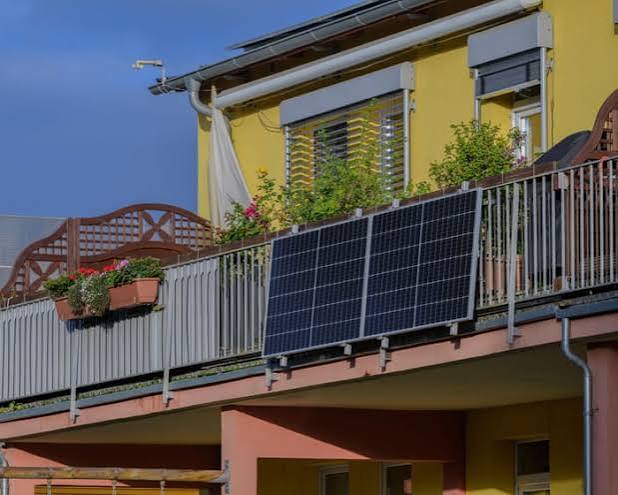
Efficiency is another detail worth watching. Two panels of similar dimensions may have different output ratings because their solar cells do not convert sunlight into electricity at exactly the same rate. This can be especially important where balcony space is tight. A more efficient panel may produce more electricity from a smaller area, which makes it attractive for railings, compact terraces, or narrow exterior walls. It also gives residents more flexibility when available mounting space is awkward. Looking at both dimensions and rated performance provides a much clearer comparison than judging a panel by physical size alone.
Orientation, angle, and local weather can change the results again. A panel facing a favorable direction and tilted toward the strongest sunlight may perform better throughout the day than a larger panel installed almost entirely upright in a shaded spot. Seasons matter too. Summer can bring longer daylight hours, while winter often introduces shorter days and different sun angles. Cloud cover, rain, heat, and surrounding structures can all influence production. Because of these variables, expected output is best treated as a range rather than a fixed number that remains the same every day.
Choosing the right setup is ultimately about matching equipment to the conditions available. Measuring the usable area, observing where shadows appear, checking orientation, and comparing panel efficiency can reveal far more than simply choosing the biggest option that fits. For many apartment households, balcony solar panels perform best when size, sunlight, placement, and efficiency are considered together. A carefully selected smaller system can be more practical than an oversized one that struggles with poor exposure. Bigger can certainly help, but smart positioning and realistic planning often make the real difference between a system that merely fits the balcony and one that makes useful electricity.